
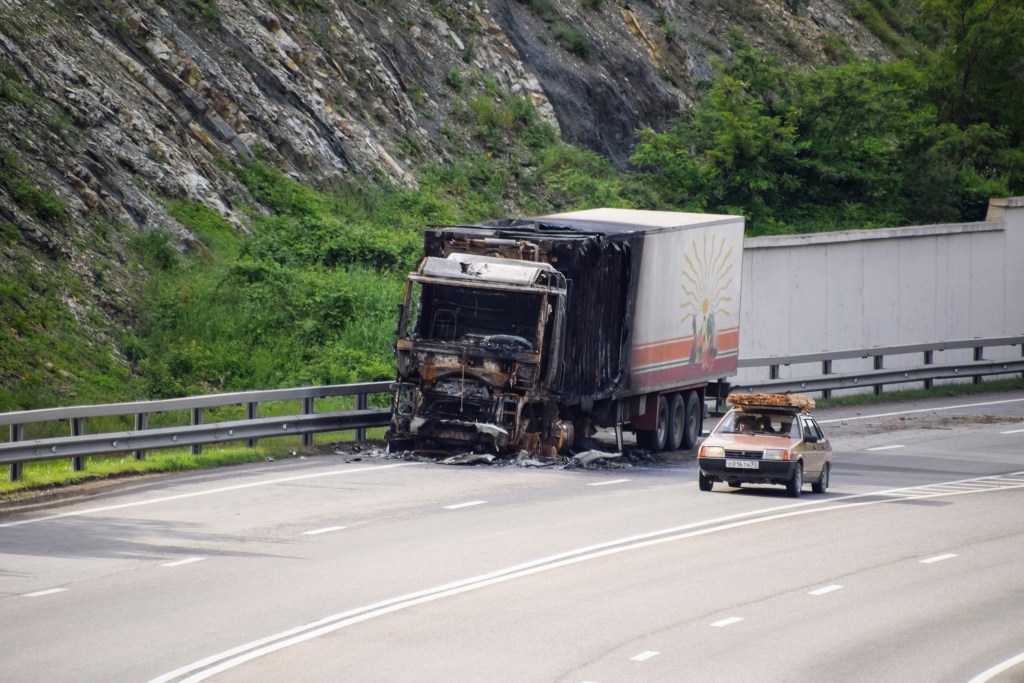

Truck (18-Wheeler) Accidents on I-77 in North Carolina
I-77 is a major corridor through North Carolina, carrying local traffic and heavy commercial trucking every day.
When an 18-wheeler crash happens, injuries are often severe, the investigation is more complex than a typical car wreck,
and multiple companies and insurance policies may be involved.
Executive Summary
Truck accident claims on I-77 often hinge on early evidence—driver logs, electronic data, maintenance records, and crash-scene documentation.
Liability may extend beyond the truck driver to the motor carrier, a trailer owner, a shipper or loader, or a maintenance contractor.
North Carolina’s strict contributory negligence rule can also become a key issue, so careful fact development from the beginning is critical.
Topic Overview
Collisions involving tractor-trailers are different from standard car accidents because of the size and weight of commercial trucks,
longer stopping distances, wider turns, and the operational demands placed on drivers.
On I-77, common risk areas include high-speed stretches, congestion zones, lane merges, work zones, and interchanges.
Truck crashes on I-77 frequently involve:
- Rear-end impacts caused by speed differentials or following too closely
- Lane-change or sideswipe collisions in heavy traffic
- Underride scenarios when smaller vehicles collide with a trailer
- Jackknife events during braking, wet weather, or evasive maneuvers
- Rollover crashes tied to curves, load shifts, or improper loading
North Carolina Legal Framework
North Carolina is generally a fault-based state for motor-vehicle collisions. In plain terms, the party that caused the crash may be responsible
for damages such as medical expenses, lost income, and other losses allowed by law, depending on the facts and proof.
Truck cases often involve a layered legal and regulatory backdrop. In addition to state traffic rules, commercial trucking operations are commonly governed
by federal safety requirements that address issues like driver qualification, hours-of-service, inspection and maintenance, cargo securement,
and drug and alcohol testing. Identifying which rules apply—and whether they were followed—can be central to establishing liability.
North Carolina also follows a strict contributory negligence rule. If an injured person is found even slightly at fault,
recovery may be barred. Insurers often scrutinize speed, following distance, lane positioning, signaling, and evasive actions.
This makes reliable documentation and consistent reporting especially important.
This article provides general information, not legal advice. Rights and outcomes depend on the specific facts, evidence, and applicable law.
Practical Scenarios and Common Questions
Who can be responsible for an I-77 truck accident?
Responsibility may extend beyond the truck driver. Depending on the facts, potentially responsible parties can include the motor carrier,
a broker, a trailer owner, a shipper or cargo loader, or a maintenance provider. In some cases, roadway conditions or third-party drivers may also play a role.
Why do trucking cases require faster evidence preservation?
Commercial vehicles often generate data that can be overwritten or lost, and documents may be routinely purged on set schedules.
Early preservation requests can be important for items like electronic logging data, onboard event data, dash or inward-facing camera footage,
maintenance files, and dispatch communications.
What if the trucking insurer contacts me immediately?
Early calls often focus on recorded statements and quick settlement discussions. You do not have to guess about fault, speed, or what you “should have done.”
It is usually best to be careful, stick to confirmed facts, and avoid signing releases until you understand what is being requested.
What if the crash involved multiple vehicles?
Multi-vehicle collisions can involve competing fault theories. A full evaluation typically looks at sequence of impacts, lane positions, witness accounts,
vehicle damage patterns, and any available electronic or video evidence.
Tables
Liability factors often investigated in I-77 18-wheeler crashes
| Issue | Why It Matters | Examples of Evidence |
|---|---|---|
| Driver fatigue / hours-of-service | Fatigue can affect reaction time and judgment | Electronic logs, dispatch records, fuel/scale receipts |
| Speed and following distance | Stopping distance is much longer for tractor-trailers | Event data, skid marks, video, reconstruction |
| Distracted driving | Phone use and in-cab distractions can cause delayed response | Phone records, onboard video, witness statements |
| Improper loading or load shift | Unstable cargo can increase rollover and braking risk | Bills of lading, load diagrams, inspection notes |
| Maintenance and mechanical defects | Brake, tire, and lighting issues can contribute to crashes | Maintenance logs, inspection reports, repair invoices |
What to do after a truck accident on I-77
| Step | Purpose |
|---|---|
| Call 911 and get medical care | Protects health and creates early documentation |
| Request a crash report | Creates an official record and identifies parties |
| Photograph the scene | Preserves lane positions, damage, and road conditions |
| Identify the trucking company | Helps locate insurance and responsible entities |
| Collect witness information | Supports your account if facts are disputed |
| Preserve your records | Medical bills, missed work, symptoms, and expenses |
What to Do Next
If you were hurt in an 18-wheeler accident on I-77, focus on health, documentation, and protecting evidence:
- Follow medical advice and keep a consistent treatment record
- Write down what you remember while it is fresh (location, traffic conditions, lane positions)
- Save photos, tow receipts, rental car receipts, and all insurer communications
- Avoid speculating about fault or making guesses in recorded statements
- Consider a legal review early, especially when injuries are significant or fault is disputed
Truck claims can move quickly behind the scenes. Early evaluation can help prevent lost evidence and reduce avoidable delays.
Talk to a North Carolina Truck Accident Lawyer
Burts Law, PLLC helps people injured in commercial truck accidents across North Carolina, including crashes on I-77.
If you have questions about liability, insurance coverage, or what evidence matters most, we can provide clear guidance based on the facts of your situation.
Contact Burts Law, PLLC to schedule a consultation and learn more about your options.
